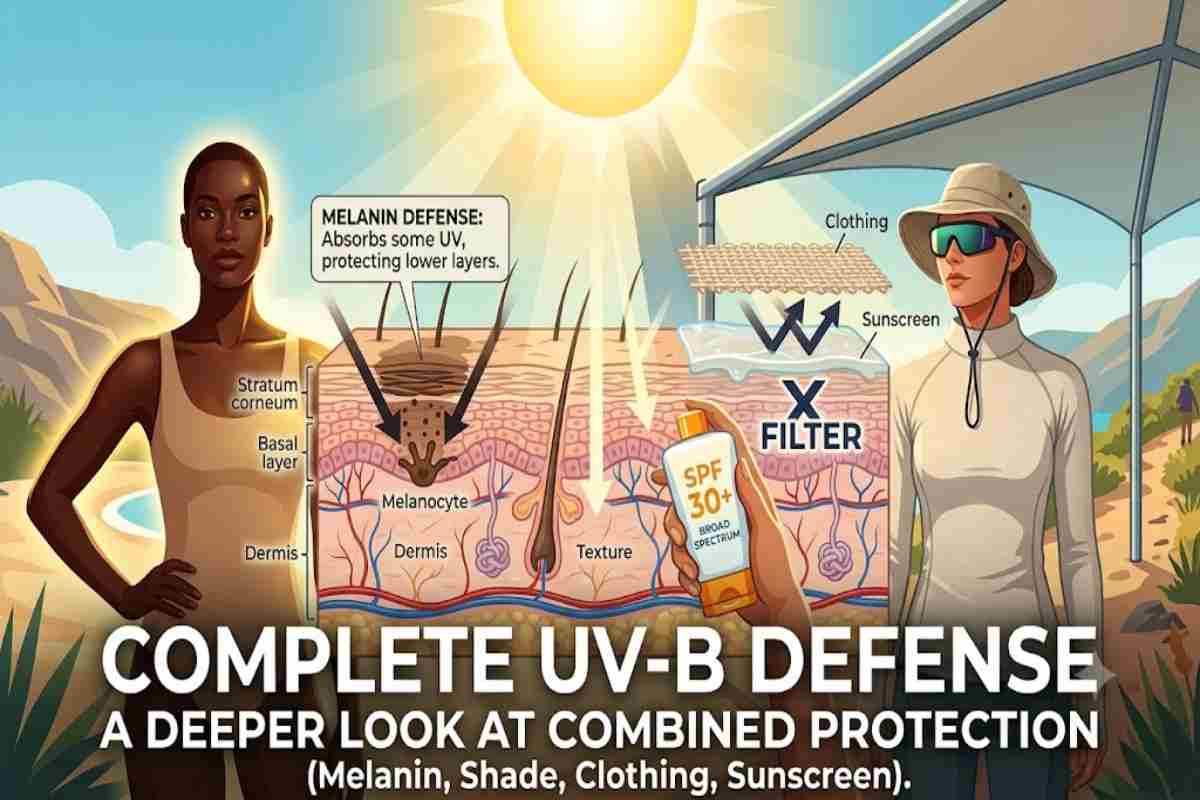
What protects humans from harmful UV-B rays? Humans are protected from harmful UV-B radiation by a combination of natural defences such as the skin’s melanin, along with practical measures including shade, protective clothing and broad-spectrum sunscreen. UV-B is a major cause of sunburn, so reducing direct exposure is an important part of everyday sun protection.
Have you ever wondered what blocks the harmful UV-B ray from man kind, Melanin; sunblock; clothing; and shade were the general and obvious answer to this question. Man does have some protective functions on the surface of his body in the form of melanin and but is otherwise insufficient in blocking UV radiation. In order to prevent the effects of UV radiation some normal daily routines should be used when the amount of time on the skin exposed is sufficient.
UV-B radiation has been highly linked to sunburn and provides long-term skin damage. One positive thing is that simple steps can be taken to significantly minimize exposure.
What Are UV-B Rays?
The sun’s rays are responsible for UV radiation. UVA and UVB are the most pertinent to our day-to-day sun exposure protection. UVB wavelengths are shorter than UVA wavelengths and have the most significance for sunburn prevention. In high doses, UVB rays are also likely to cause DNA damage and skin cancer.
Not all forms of radiation are evident to the eye, unlike some others for example. A person can gain a UV radiation dose on a bright day; it’s possible to obtain levels of UV when it doesn’t necessarily feel warm although the health warnings suggest that precautions should be taken when the UV Index goes up to and is higher than 3.
What Protects Humans From Harmful UV-B Rays?
There is no single perfect barrier. Effective protection comes from combining several methods.
| Protection method | How it helps against UV-B | Practical use |
|---|---|---|
| Melanin | Provides some natural absorption of UV radiation | Natural skin defence, but incomplete |
| Sunscreen | Filters UV radiation reaching exposed skin | Use broad-spectrum SPF 30+ |
| Clothing | Creates a physical barrier | Prefer tightly woven or UPF-rated fabrics |
| Shade | Reduces direct exposure | Particularly useful around midday |
| Wide-brimmed hat | Covers face, ears and neck | Useful during outdoor activities |
| UV-protective sunglasses | Protects the eyes from UV | Choose labelled UV protection |
The American Academy of Dermatology encourages the use of shade, sun-protective clothing AND sunscreen rather than exclusively using sunscreen.
1. Melanin: The Body’s Natural Defence
Melanin is the colouring pigment synthesized by a special type of cell in the skin, which then proceeds to absorb some of the UV light to which the skin is subjected giving it a natural sun protection effect;However it does not make the skin absolutely free from the harms from UV light. Dark-skinned people still suffer from sun damage, hyper-pigmentation and skin cancer. Accordingly, skin tone should not take the role of the sun protection.
2. Sunscreen
The most recognize protective products for exposed skin is sunscreen. A daily-use, broad-spectrum sunscreen should have an SPF of at least 30. Broad-spectrum sunscreen protect against the two type of ultraviolet light, UVA and UVB radiation.
Also understand what the designation of SPF means. SPF refers to protection against sunburning, which in real life is primarily caused by UVB. For example, the AAD states that, under standard test conditions, an SPF 30 sunscreens blocks about 97% of UVB. And that doesn’t translate to it blocking each UV B ray, every single time on your face and body.
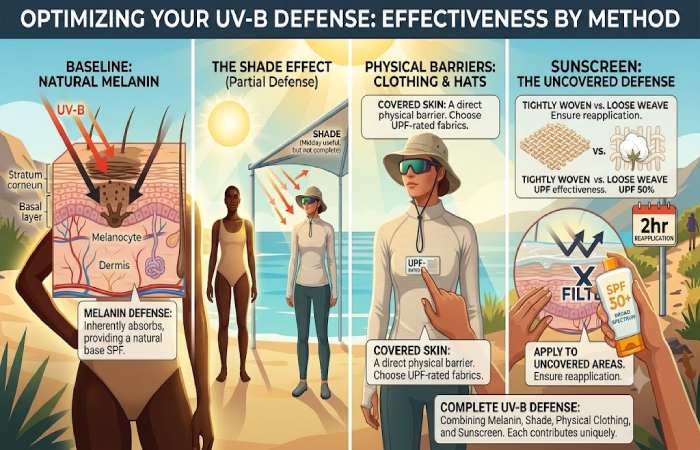
UV-B Protection Workflow
A practical approach is:
Check UV Index → Seek shade → Cover exposed skin → Apply sunscreen → Reapply when necessary
Step 1: Check the UV Index
When the UV Index is high, reduce unnecessary direct exposure, particularly around the middle of the day.
Step 2: Use Shade
Shade reduces direct solar exposure but does not eliminate UV radiation. Reflected and scattered UV can still reach the skin.
Step 3: Cover Your Skin
Long sleeves, trousers, tightly woven fabrics and UPF-rated clothing can provide a physical barrier.
Step 4: Apply Sunscreen to Exposed Areas
Apply broad-spectrum SPF 30+ sunscreen to areas that clothing does not cover.
Step 5: Reapply
When outdoors, sunscreen generally needs to be reapplied about every two hours and after swimming or heavy sweating, following the product’s instructions.
How Effective Is UV-B Protection?
A common mistake is expecting sunscreen or another single product to provide complete protection.
Realistic expectation: good sun-protection habits can substantially reduce UV exposure, but they cannot make outdoor exposure completely risk-free.
Protection can also vary according to:
- Amount of sunscreen applied
- Whether it is reapplied
- Clothing weave and coverage
- Whether clothing becomes wet or stretched
- Duration of outdoor exposure
- UV Index
- Reflection from water, sand and other surfaces
The WHO specifically notes that clothing and shade should form an important part of protection rather than using sunscreen as a way to extend time in the sun.
Clothing and Shade vs Sunscreen
| Factor | Clothing & shade | Sunscreen |
|---|---|---|
| Primary role | Physical reduction of exposure | Protects uncovered skin |
| Coverage | Can cover large areas | Only applied areas |
| Reapplication | Usually unnecessary during normal wear | Required during extended outdoor activity |
| Water/sweat impact | Depends on fabric | Can reduce effectiveness |
| Best use | First line of defence | Complementary protection |
For people spending substantial time outdoors in India’s strong sunlight, combining these methods is generally more practical than depending on sunscreen alone.
What About Sunglasses?
UV protection is also important for the eyes.
The WHO recommends wraparound-style sunglasses providing 99–100% UVA and UVB protection for reducing UV-related eye exposure.
Dark-looking lenses are not automatically UV-protective, so check the product specifications rather than judging protection by lens colour alone.
Common Mistakes to Avoid
Applying too Little Sunscreen
Using a very thin layer may provide substantially less protection than the SPF number on the packaging suggests.
Forgetting the Ears and Neck
These areas can receive considerable sun exposure. Sunscreen should be applied to exposed skin, including commonly missed areas.
Assuming Shade Blocks Everything
Trees, umbrellas and canopies reduce exposure but are not perfect UV barriers. Reflected radiation can still reach you.
Thinking Darker Skin Needs No Protection
Melanin provides some natural protection, but it does not eliminate UV-related risks.
Treating SPF as a Time Multiplier
SPF should not be interpreted as meaning you can stay in the sun for a correspondingly longer period. Sun protection is about reducing exposure, not extending it.
Who Needs Extra Care?
Everyone benefits from sensible UV protection, but extra care is appropriate for people who:
- Work outdoors
- Spend long periods at beaches or swimming pools
- Participate in outdoor sports
- Have very sensitive or sun-reactive skin
- Take medicines that increase photosensitivity
- Have a personal or family history of skin cancer
Children and adolescents also deserve particular attention because repeated UV exposure and sunburn during childhood can contribute to later health risks.
FAQs
What protects humans from harmful UV-B rays?
The main protections include melanin, shade, protective clothing and sunscreen. For exposed skin, broad-spectrum SPF 30 or higher sunscreen is commonly recommended alongside physical protection.
Does sunscreen completely block UV-B rays?
No. Sunscreen reduces UV exposure but does not completely eliminate it. SPF 30, for example, filters approximately 97% of UVB under standard testing conditions.
Does clothing protect against UV-B?
Yes. Clothing creates a physical barrier against UV radiation. Tightly woven fabrics and garments carrying a UPF rating can provide more predictable protection.
Is melanin enough to protect the skin from UV-B?
No. Melanin provides natural protection, but it is incomplete. People of all skin tones can experience UV-related skin damage.
Does shade protect against UV-B?
Yes, shade can substantially reduce direct UV exposure, but it does not block all UV. Reflected and scattered radiation can still reach exposed skin.
Conclusion
So, what protects humans from harmful UV-B rays? The best answer is a combination of the body’s natural melanin defence and sensible external protection: shade, protective clothing, hats, UV-protective sunglasses and broad-spectrum sunscreen. No single method provides perfect protection. In my everyday, and especially on particularly sunny days combination is quite likely to be more achievable than having to use a single item alone.